
• Skip to Content
  • Skip to Main Navigation
  • Skip to Search

Indiana University Indianapolis Indiana University Indianapolis IU Indianapolis

Open Search
  • About
    • FSPH Team Profiles
  • DIP-IN Communities
    • Northeast
    • Near Northwest
    • Near West
    • Community Team Profiles
  • Community Resources
    • Community Resource Guides
  • News, Publications & Media
    • News
    • Quarterly Updates
    • Publications & Reports
    • Multimedia
    • Subscribe
  • Contact

Diabetes Impact Project

  • Home
  • About
    • FSPH Team Profiles
  • DIP-IN Communities
    • Northeast
    • Near Northwest
    • Near West
    • Community Team Profiles
  • Community Resources
    • Community Resource Guides
  • News, Publications & Media
    • News
    • Quarterly Updates
    • Publications & Reports
    • Multimedia
    • Subscribe
  • Contact
  • Search
  • Home
  • News, Publications & Media
  • News
  • Asuka Elms, MPH graduate student, studies DIP-IN networks

Asuka Elms, MPH graduate student, studies DIP-IN networks

Wednesday, May 27, 2026

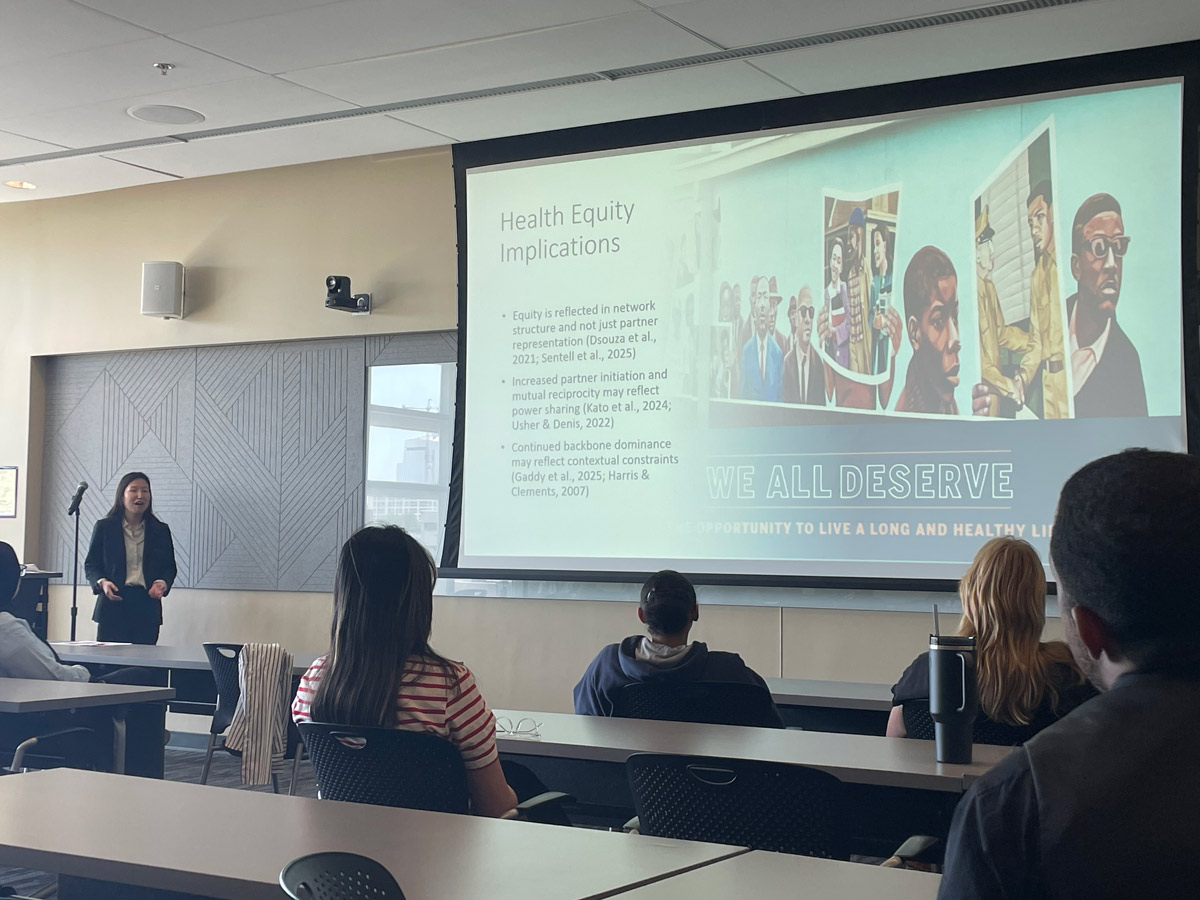
DIP-IN graduate student employee, Asuka Elms, presents on Social Network Analysis (SNA) findings at IU’s Graduate Day of Scholarship.
Asuka Elms presents on Social Network Analysis (SNA) findings at IU’s Graduate Day of Scholarship.

DIP-IN graduate student employee, Asuka Elms, has been hard at work over the last six months leading an important component of the DIP-IN evaluation using Social Network Analysis (SNA) methodologies. SNA is an evaluation tool that is used to examine, measure, and understand relationships – also known as “networks” – through data visualizations.

In this work, Asuka led the DIP-IN team in analyzing meeting data collected by DIP-IN neighborhood community health workers (nCHWs) and project managers from 2019-2025.

The analysis explored key characteristics of DIP-IN’s organizational partnerships, including levels of engagement, the number of organizations involved, who initiated connections (DIP-IN versus organization, or both), and how continuous or not the partnership was over time.

The findings revealed patterns that closely reflect the DIP-IN team’s lived experience of building and sustaining partnerships across communities. Because SNA is best understood visually, an example of these network maps is included below.
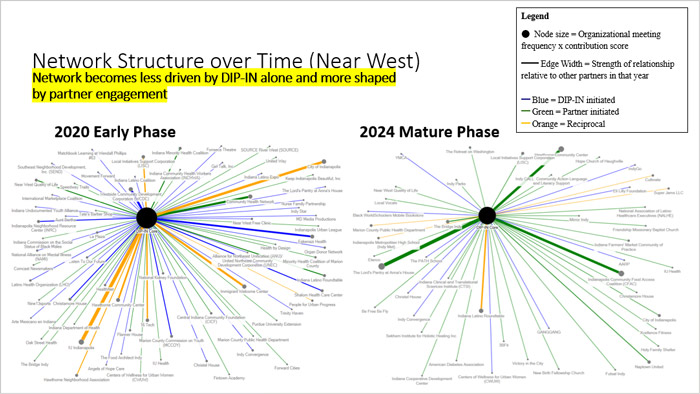
Examples of an SNA data visualization are pictured, for context. The DIP-IN backbone team is located at the center of the visualization, with participating organizations, also known as “nodes,” branching out. SNA methods allow our team to see how relationship networks change over time.

Asuka presented this work at IU’s Graduate Day of Scholarship in late April and will continue to share these findings in May at the North Carolina Community Health Worker Summit. This is particularly meaningful because Asuka worked as a CHW in North Carolina prior to coming to Indianapolis.

Her presentation is entitled “Making Community Health Worker Impact Visible Through Network Documentation” and will focus on the importance of documenting the impact of CHW relationship building; an extremely valuable but under-reported aspect of CHW work.

This SNA work has provided the DIP-IN team with a powerful tool to better understand how organizational relationships unfolded over time and how these networks influence outcomes. Future efforts will include publishing the findings and expanding the analysis to examine the network connections of organizations that eventually became Community Health Improvement Project (CHIP) partners.

  • News
  • Quarterly Updates
  • Publications & Reports
  • Multimedia
  • Subscribe

Diabetes Impact Project social media channels

  • Richard M. Fairbanks School of Public Health
  • Twitter
  • Facebook
  • Instagram
  • YouTube
  • LinkedIn

Indiana University

Accessibility | College Scorecard | Open to All | Privacy Notice | Copyright © 2026 The Trustees of Indiana University